
 es
es en
en de
deEfficiency and Durability: FRP in the Paper and Pulp Industry
In the realm of the paper and pulp industry, where efficiency, durability, and resistance to harsh chemicals are paramount, the choice of materials for process tanks becomes crucial. Fiberglass Reinforced Plastic (FRP) has emerged as a leading contender for constructing these tanks due to its exceptional properties and numerous advantages. This article delves into the application and advantages of FRP in process tanks within the paper and pulp industry, exploring how this innovative material enhances operations and sustainability.

Understanding Fiberglass Reinforced Plastic
Fiberglass Reinforced Plastic, commonly known as FRP, is a composite material made of a polymer matrix reinforced with fibers of glass. The polymer matrix, typically epoxy, polyester, or vinyl ester resin, binds the fibers together, imparting strength and rigidity to the composite. The addition of glass fibers enhances mechanical properties such as tensile strength, flexural strength, and impact resistance, making FRP an ideal material for various industrial applications.
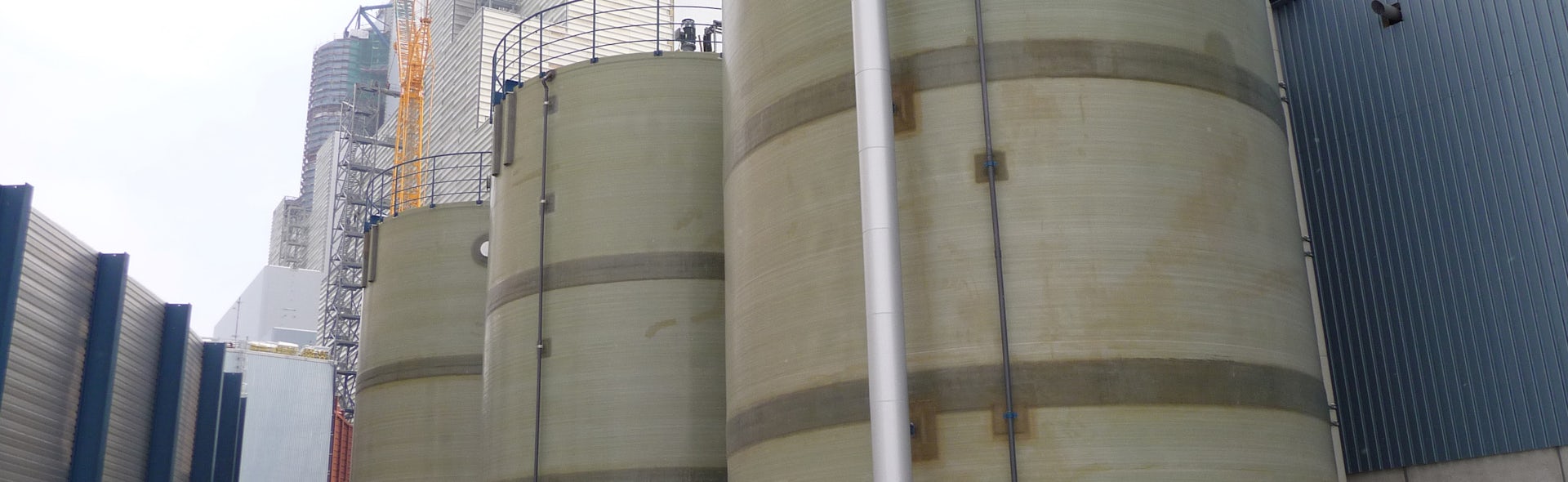
Application in the Paper and Pulp Industry
In the paper and pulp industry, where corrosive chemicals and demanding operating conditions are commonplace, process tanks play a vital role in various stages of production, including pulping, bleaching, and chemical treatment. FRP's unique combination of properties makes it well-suited for constructing these tanks, offering numerous benefits over traditional materials like steel or concrete.
- Corrosion Resistance: One of the primary advantages of FRP in process tanks is its exceptional resistance to corrosion. In the paper and pulp industry, where aggressive chemicals such as sulfuric acid and chlorine are used extensively, corrosion poses a significant challenge to equipment longevity. FRP's inert nature makes it impervious to most corrosive substances, ensuring long-term durability and minimal maintenance requirements.
- Lightweight and High Strength: FRP's lightweight nature is a significant advantage, particularly in large-scale process tank installations. Unlike steel or concrete tanks, which are heavy and cumbersome to transport and install, FRP tanks offer ease of handling and reduced installation time. Despite being lightweight, FRP exhibits remarkable strength, capable of withstanding substantial internal and external pressures, thereby ensuring structural integrity and reliability.
- Customization and Design Flexibility: FRP's inherent moldability and versatility allow for the fabrication of custom-designed tanks tailored to specific application requirements. Manufacturers can easily adjust tank dimensions, shapes, and configurations to fit space constraints or accommodate unique process needs. Additionally, various additives can be incorporated into the resin matrix to impart specific properties such as flame retardancy or UV resistance, further enhancing the suitability of FRP for diverse applications in the paper and pulp industry.
- Thermal Insulation: In processes involving temperature-sensitive materials or thermal treatments, such as pulp cooking or bleaching, thermal insulation is crucial to maintaining optimal operating conditions and preserving product quality. FRP's low thermal conductivity provides inherent insulation properties, minimizing heat transfer and reducing energy consumption associated with maintaining process temperatures. This not only enhances operational efficiency but also contributes to cost savings and environmental sustainability.
- Environmental Sustainability: Sustainability is an increasingly important consideration in industrial applications, including the paper and pulp industry. FRP's eco-friendly attributes make it an attractive choice for environmentally conscious organizations. Unlike traditional materials such as concrete or steel, which may require resource-intensive manufacturing processes and have significant environmental footprints, FRP production involves lower energy consumption and emissions. Additionally, FRP tanks have a longer service life and are fully recyclable at the end of their operational lifespan, further reducing environmental impact and promoting circular economy principles.
- Resistance to Biological Growth: In environments where microbial or fungal growth poses a risk, such as in water treatment processes or storage tanks, FRP's smooth, non-porous surface inhibits the adhesion and proliferation of biological organisms. This inherent resistance to biological growth minimizes the need for chemical treatments or cleaning procedures, reducing maintenance costs and ensuring consistent process performance.
Conclusion
In conclusion, Fiberglass Reinforced Plastic (FRP) offers a myriad of advantages for constructing process tanks in the paper and pulp industry. Its exceptional corrosion resistance, high strength-to-weight ratio, design flexibility, thermal insulation properties, environmental sustainability, and resistance to biological growth make it an ideal choice for demanding applications. By leveraging the benefits of FRP, paper and pulp manufacturers can enhance operational efficiency, reduce maintenance costs, and promote sustainable practices, thereby ensuring long-term success in a competitive industry landscape. As technological advancements continue to drive innovation in materials science, FRP remains at the forefront as a reliable and versatile solution for meeting the evolving needs of the paper and pulp industry.
Performance and Service Life
Field Experience
Multiple long-term field studies report FRP and dual laminate equipment remaining in service for over 20–30 years in bleach plant environments [3][6]. UTComp and Thorpe Industrial, among others, have documented minimal degradation of corrosion barriers when materials are properly selected and fabricated [5][6].
A notable case study describes two FRP chlorine dioxide tanks operating for over 30 years in continuous service, showing only localized wear in the inner corrosion layer [6]. Failures that do occur are generally attributed to design or fabrication deficiencies rather than inherent material limitations [1][3][4].
Inspection and NDT
Modern non-destructive testing (NDT) techniques — such as ultrasound, laser shearography, and advanced thermography — have improved the reliability of in-service FRP inspection. These methods allow early detection of delamination, blistering, or corrosion layer thinning [5].
Application Areas
Storage and Process Tanks
FRP and dual laminate tanks are commonly used for:
-
Chlorine dioxide, sodium hypochlorite, caustic soda, and tall oil storage
-
Chemical mixing vessels
-
Wastewater and condensate treatment tanks
Benefits include corrosion resistance without expensive alloys, large diameters (10–15 m and beyond) achievable via on-site fabrication, and lower foundation loads due to reduced weight [3][4].
Piping Systems
Dual laminate piping systems (e.g., PVDF/FRP, ECTFE/FRP) provide safe transport for strongly oxidizing, acidic, or caustic media, outperforming rubber-lined steel and certain high-alloy metals in chemical bleaching and recovery circuits [2][4][7].
Gas Cleaning and Emission Control
FRP is a standard material for absorbers, scrubbers, and ducting systems handling SO₂, HCl, and Cl₂ gases. Its excellent corrosion resistance combined with lightweight construction makes it particularly suitable for large-scale gas handling installations [1][3][6].
Design and Safety Considerations
Proper design and quality assurance are essential for reliable FRP and dual laminate equipment. Key aspects include:
-
Design standards: ASME RTP-1, EN 13121, and NACE guidelines.
-
Material compatibility: resin and liner selection based on medium, temperature, oxidation potential, and permeation resistance [1][2].
-
Mechanical design: low allowable stresses, creep considerations, and adequate support and anchoring.
-
Lamination and corrosion barrier: correct glass/resin ratio, curing control, and thickness verification.
-
Dual laminate bonding: secure adhesion between liner and FRP, particularly around nozzles and flanges.
-
Inspection & testing: visual inspection, spark testing, ultrasonic NDT, and regular condition monitoring [5][6].
Failure analysis consistently shows that design or fabrication errors (e.g. under-curing, poor detailing, or wrong resin choice) — rather than material limitations — are the leading causes of premature failures [1][3][5].
Sustainability and Economic Analysis
Life Cycle Cost (LCC)
Although initial investment for FRP or dual laminate systems can be comparable or slightly higher than for rubber-lined steel, their total cost of ownership is substantially lower due to:
-
Reduced maintenance and inspection frequency
-
Extended service life (20–30+ years)
-
Lightweight construction → lower foundation and handling costs
Several life cycle assessments confirm that FRP systems provide superior cost efficiency and reliability in corrosive service [1][4].
Environmental Impact
Sustainability benefits include:
-
Fewer leaks and emissions thanks to higher chemical resistance and integrity
-
Reduced transport and lifting energy
-
Extended lifetime reduces overall material consumption
Recent R&D efforts are focused on bio-based and recyclable resins, which will further enhance the environmental performance of FRP in future applications [1].
Discussion
Scientific and industrial data clearly demonstrate that FRP and dual laminate materials are mature, safe, and economically viable solutions for corrosive environments in the pulp and paper sector.
They enable process reliability while reducing maintenance, emissions, and lifecycle costs.
Future development priorities include:
-
Long-term monitoring of permeation and stress corrosion in mixed oxidizing media
-
Improved NDT and in-service health monitoring methods
-
Enhanced adhesion and mechanical properties for dual laminate interfaces
-
Increased sustainability through recyclable and low-carbon resin systems
Conclusion
FRP and dual laminate systems have evolved from alternative materials into core technologies for corrosive service in the pulp and paper industry — particularly in bleaching, chemical handling, gas cleaning, and effluent treatment.
Their combination of excellent corrosion resistance, design flexibility, lightweight construction, and proven long-term reliability makes them indispensable for modern, sustainable industrial operations.
Where engineering design, material selection, and fabrication quality are ensured, service lives of several decades are achievable with minimal maintenance — representing a clear technical and economic advantage.
References
[1] FRP Material Selection Guide – Aqua & Energy Expo (2022).
[2] Stainless Steels and Specialty Alloys for Pulp, Paper and Biomass – The Nickel Institute (2022).
[3] FRP & Dual Laminate Tanks – RPS Composites (2023).
[4] Thorpe Plant Services – “FRP and Dual Laminate Specialists: Tank Corrosion Control” (2016).
[5] Evident Scientific – “Inspecting FRP Composites: Innovative Ultrasonic NDT Techniques” (2022).
[6] UTComp Field Study – “Chlorine Dioxide FRP Tanks after 30 Years of Continuous Service” (2023).
[7] Andronaco Industries – “Dual Laminate Piping Systems for Corrosive Media” (2022).